Five Automation Trends for 2026 that Manufacturers Need to Watch

By: Tim Swedberg

As automation in manufacturing continues to grow, awareness of industrial automation news provides insight into the up-and-coming automation and industrial robotics trends and technologies that can give you the competitive edge you need to succeed in today’s fast-paced manufacturing industry.


Key automation trends for 2026 include:


  • Flexible automation for high-mix manufacturing.
  • Predictive maintenance tools and data utilization.
  • Workforce augmentation vs. replacement.
  • Integration of controls across platforms.
  • Safety and compliance automation.


This blog will explore these five trends and how you can use these industrial automation insights to maximize efficiency, safety, and quality while minimizing operational costs.

Trend 1: Flexible Automation for High-Mix Manufacturing

Traditionally, automation in manufacturing was only applied in facilities that mass produce products because it lacked the flexibility for high-mix manufacturing operations. Fortunately, today’s more flexible automation technologies provide solutions for manufacturers with frequent changeovers, variable production schedules, and complex part handling.


The challenge with automating high-mix production has been that traditional automation focused on increasing the speed of a dedicated process. But today’s more flexible automation – which relies on next-generation robots, machine vision systems, and software – is easily adaptable to high-mix manufacturing.

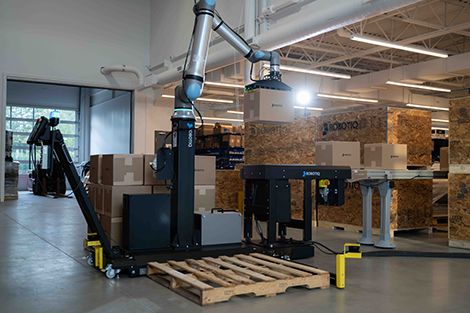
Collaborative robots (cobots) feature built-in safety technologies, quick end-of-arm tooling changeovers, and user-friendly programming, so they can be moved around the facility and reprogrammed as often as needed.


Pairing cobots with machine vision systems and software provides pattern-recognition capabilities and intuitive interfaces, enabling modern robots to recognize and handle new parts and learn new tasks without extensive reprogramming or costly retooling. This inherent flexibility provides speedy changeovers and adaptable systems for variable production runs, enabling faster transitions, greater efficiencies, and lower costs for high-mix manufacturers.

Trend 2: Predictive Maintenance Tools and Data Utilization

Unplanned downtime costs manufacturers tens of thousands of dollars per hour in lost productivity, but using predictive maintenance tools, such as data collection and analytics software, to promote proactive maintenance maximizes uptime and reduces staggering downtime expenses.

The use of Internet of Things (IoT)-enabled technologies, including sensors, data analytics software, and machine learning/artificial intelligence (AI), can be applied to critical assets, enabling the transition from reactive to proactive maintenance.

Here’s how:

Using sensors and data analytics as predictive maintenance tools reduces unplanned downtime, minimizes production disruptions, and catches issues before costly catastrophic failure. This type of proactive maintenance strategy not only reduces operational and repair costs but also optimizes equipment availability, throughput, and lifespan, increasing profits and improving the bottom line.

Trend 3: Workforce Augmentation vs. Replacement

When automation in manufacturing was first introduced, the expectation was that technology would replace manual labor. More recently, however, industrial robotics trends center around using automation to support workers so they can apply their skills to more value-added work.


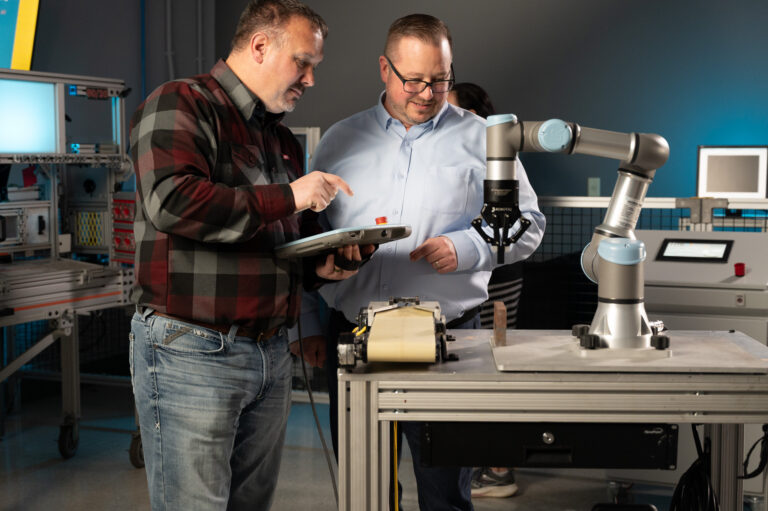
The introduction of next-generation collaborative robots, or cobots, is a prime example of the trend toward augmentation. In modern applications, cobots automate repetitive and labor-intensive tasks, while humans manage more strategic roles that demand complex thinking or problem solving. For example, in a shared assembly workspace, a cobot may perform repetitive screw driving tasks, while a human worker handles complex alignment of parts.


This type of collaborative approach pairs the value of human decision-making with the precision and speed of industrial robots, maximizing productivity, consistency, and quality of operations. As the cost of automating with flexible cobots is lower than that of traditional industrial robots, manufacturers are likely to embrace this type of workforce augmentation going into 2026 to offset the shortage of skilled labor.

Trend 4: Integration of Controls Across Systems

Process control is key to achieving efficiency, accuracy, and reliable operation of automated equipment, so it makes sense that integrated industrial control systems, where various machines, tools, and technologies work together as one centralized system, will further enhance these benefits going forward.


Integrated industrial control systems connect hardware, such as sensors, PLCs, and production equipment, and controls, such as SCADA systems and Human Machine Interfaces (HMIs), into a single, unified system. Connecting industrial machines and control systems through networked integration enables real-time data exchange, remote monitoring, and precision process control.


Unlike traditional siloed control, integrated control enables a holistic view of the entire operation, allowing modern manufacturers to make on-the-fly informed decisions about process adjustments that help increase efficiency, improve quality, and optimize the entire operation.


For example, in a manufacturing facility with connected factory automation, traditionally disparate systems, such as an assembly robot, a conveyor, and an automated packaging solution, would be brought together and controlled by a centralized system that uses real-time data collected from sensors to tighten control of production equipment, machine vision systems to ensure accuracy and quality, and software for part tracking.


The real value of connected factory automation is that it enables real-time monitoring, control, and adjustment of the entire production process from start to finish, which increases efficiency and productivity, reduces manufacturing errors, scrap, and waste, and improves overall equipment effectiveness, optimizing production and significantly reducing costs.


Trend Five: Focus on Safety and Compliance

Safety is a priority in all manufacturing facilities. Compliance with workplace and product safety, environmental regulations, and cybersecurity standards provides businesses with a competitive edge; however, managing compliance using paper-based records and reporting can lead to compliance failures.


However, the continuous monitoring, tight control, and reduction of human errors provided by automation in manufacturing helps increase compliance with product safety and environmental mandates, and removing the human workforce from hazardous situations by using automated technologies increases workplace safety.


Further, many automated industrial control systems collect and analyze process data in real-time, enabling fast response when production, emissions, or quality parameters go out of spec, helping manufacturers manage issues before they result in non-compliance.


For example, visibility into the process and the ability to react quickly to avoid escalation give manufacturers the ability to prevent an unsafe product from reaching consumers or to stop a runaway process from creating a hazardous situation, minimizing the chances of costly product recalls, safety incidents, or environmental non-compliance.


Additionally, many industrial control systems and software products offer compliance updates and automated reporting, significantly reducing the manhours required to keep up with changing regulations and compliance tracking, auditing, and reporting. This ensures compliance and reduces the costs associated with compliance reporting and non-compliance fines, boosting the bottom line and bolstering company reputation.


As these automation and industrial robotic trends take root, manufacturers who want to remain competitive will integrate them into their businesses to ensure efficiency, minimize costs, and bolster compliance efforts. The experts at Tavoron are here to evaluate your current process and help you decide where automation can make the biggest impact on your operations.

  • Senior Vice President of Automation Integration Group, Tavoron

    Tim Swedberg, a senior executive with over 30 years of experience in automation integration, is currently serving as Senior VP at Tavoron, where he leads the Automation Integration Group. Previously, he was Divisional VP of Global Operations at BW Packaging and founded PASE Group, combining technical expertise and strategic leadership to drive innovation in industries like packaging and food & beverage. Tim holds a Bachelor of Science in Mechanical Engineering with a Minor in Applied Mathematics, and a Bachelor of Science in Engineering Management from the University of North Dakota. He also earned an Associate of Science in Engineering from Minnesota North College.

    View all posts